Showing posts with label Church Vitality. Show all posts

Thursday, September 3, 2015

Declining Churches Need Empowered Members


The young shepherd boy, David, went to battle against the giant enemy. David took charge of the battle and did not wait for the generals to sound the charge.

When Christians begin looking around it appears that Satan, our enemy, is winning the war. He has certainly won many of the battles.
 
Why does it look like the enemy is winning on many fronts? Doesn't the Bible declare the Church victorious? Why has the church reached a plateau and started to decline?
 
To be fair, not all churches are declining, however, most of the churches that are growing are getting bigger at the expense of other churches--transfer growth is not growth. When we begin to realize this, we will all be more motivated to do something about it. Many pastor's whose churches start syphoning off others members use the excuse, "Its not my fault that they prefer go to my church than their old one." I have heard pastor's us the phrase unchurched or under-churched to describe people that may attend a church, but are not fully engaged into the body and mission of the church. The truth is, it is just easier to attract Christians to church than non-Christians. If non-Christians were easy to reach, then all churches would be growing.

Psychologists have a term for when a person has conflicting values and try to reconcile them--cognitive dissidence. The conflict that pastor's have is that in their heart they do not like the notion that they are stealing members from other churches, but they also want to grow a church and more members means more resources. They are seduced by the thought that they are preferred to the others. It plays into their pride. They say to themselves that when my church grows large enough, then I will have the resources we need to evangelize.

Back to my question--why are churches declining?
 
I want to make several observations from my experience, from what the Christian leadership literature says, and from personal discussions with pastors and church members.
 
1. Churches decline because they have lost their ability to impact their community.
 
Many churches are not impacting their community and don't seem to know how to make a difference in the lives of the community. This is a leadership problem. In my opinion, one of the problems is that most of our churches are led by men whose primary gift is pastor. If a church is led by a man whose primary gift is pastor, they should surround themselves with men with other gifts. Pastors whose churches are growing have done this either on purpose or by accident. We need church leaders with strategic insight that can target and impact their communities, many pastors lack this strategic ability or are too busy shepherding the flock. The lead person (usually called pastor) must put together a team of gifted individuals to lead the church.

2. Churches decline because we are not training leaders that can impact their communities within their areas of gifting.

For all of the literature and discussion on Ephesians 4:11-13, it seems few churches are actually good at it. The current teaching says that the apostle, prophet, evangelist, pastor, and teacher are given to the church to train workers to build up the body of Christ. If this teaching is correct, I know of only a handful of churches in my community that does it well. If those with the gift of apostle, prophet, evangelist, pastor, and teacher cannot impact their community, how then can we expect those that they train to do much better?

Am I saying that we should never change churches?

Glad you asked...that is NOT what I am saying.

Assuming that the doctrine of the church you are attending is acceptable to you and there are not obvious signs of heresy, discord, or immorality, then you should stay and make a difference. "I am not being fed," is the most common excuse that I hear for a Christian to change churches. When I hear that, I really hear, "I am not satisfied at this church and this is the only excuse that puts the blame on the church and not my dissatisfaction."

The only good excuse for changing churches is for an opportunity to use your gifts for the glory of God. Some churches have enough people with your gift that you may not have a place to be used. If that is the case, there are many churches that need mature Christians that know what their gifts are and how to use them--go there, they would love to have you.

What is the Lord saying now?

Don't wait for the generals (church leaders) to lead you into battle. Be like David and take the fight to the giant.

Thursday, April 30, 2015

Tips to Become a More FIT Church Leader


I have proposed that the term CHURCH FITNESS is a better descriptor than CHURCH HEALTH to describe the state in which we desire to see the church.

(See my article in Churchleaders.com)

A FIT CHURCH must have a FIT PASTOR, but we often see pastors that are stressed and over worked. This is especially true with pastors of churches that have leveled off or are in decline. It is very important for these pastors to be fit and strong.

Fitness has been defined as a set of attributes that people have or achieve that relates to the ability to perform physical activity or the body's ability to function efficiently and effectively in work and leisure activities. Exercise is the primary method for a person to achieve fitness.

Applying this idea to the church as a body, I have defined CHURCH FITNESS as having the life-giving breath of God in its members with the ability of each member to function together effectively toward the fulfillment of its unique God-given mission.

For a church to become FIT, it is necessary for each member to become fit--especially the church leaders. The following activities done daily will increase strength, contribute to the fitness of the whole person, and ultimately increase the effectiveness of the church leader.

1. Do a daily physical activity such as a brisk walk.

2. Do a brain exercise, such as counting to 100, then counting backwards from 100 to 1.

3. Have a positive emotional moment each day by watching an inspirational video or looking a pictures of loved ones.

4. Engage people everyday that you do not already know and shake their hands.

5. Raise your hands and worship God for a period of time each day.

These activities may seem random, but there is an explanation for each one. Exercise is an essential activity for a person to become FIT. When a person exercises, their muscles are strengthened, the ability of the heart to bring the vital oxygen to the rest of the body grows, and the whole body increases its ability to function properly. But physical muscles are not the only areas of a person that needs daily exercise. There are five "muscles" of the body. They are physical muscle, cognitive muscle, emotional muscle, social muscle, and spiritual muscle. Positive activity in each area will strengthen the leaders and give them strength to bring their church into health and fitness.

Activity in each area should be processed through what I call the Philippians 4:8 filter. Philippians 4:8 says, "Finally, brethren, whatever is true, whatever is honorable, whatever is right, whatever is pure, whatever is lovely, whatever is of good repute, if there is any excellence and if anything worthy of praise, dwell on these things." Therefore, truth, honor, righteousness, purity, loveliness, good repute, excellence, and praise are the standard to which all activities are held.

The first way to become a better church leader is to exercise their physical body.

Engaging in any physical activity increases fitness. Many studies have shown that physical activity helps the body in many positive ways including the prevention of insulin, it reduces the risk of cognitive decline, lowers the risk of strokes, boosts the immune system, and heightens the ability to fight off illnesses such as colds and flu. An inactive lifestyle increases the changes of colon and breast cancer, heart attacks, increases the loss of lean muscle, increased bone loss, increases the feelings of depression and makes weight gain more likely. Many hard working pastors do not have the time or the inclination to exercise daily. However, studies have shown that any amount of physical activity positively affects the body. Find a physical activity that can fit into your daily routine. Something as simple as walking around the block or your building will reap many positive results.

The second way to become a better church leaders is to exercise your brain.

Researchers have done many studies that indicating the legitimacy of brain exercise and its benefits. Brain exercise has been linked to faster thinking, better memory, greater focus, creativity, better listening, and even a better mood. A simple daily activity like counting to 100 and back again to 1, helps focus the brain and builds will power by accomplishing a repetitive task like counting. Besides this activity, there are many brain exercises which bring results. One researcher suggests practicing "mindfulness". Mindfullness is actively paying attention to your immediate surroundings as though you are experiencing it for the first time. Mindfullness helps the brain to process information through all of your senses--how things look, how they sound, how they smell, how they fool. Exercising your brain daily will help you become a better leader.

The third way to become a better church leader is to exercise your emotions.

Pastoring a church, or church work in general, can be very emotional. It is critically, important for the leadership of a church to maintain a positive emotional outlook. Finding an activity such as viewing an emotionally inspiring video, looking through a family photo album or other memorabilia  that brings positive emotional feelings helps the mind, body, and spirit feel better. As human beings, we are emotionally affected by different things. It is important that we have daily positive emotional stimuli and exercise our emotional muscle.

The fourth way to become a better church leader is to interact with people, especially those that we do not know well.

Imagine the impact it might have upon your life and the life of your church if you shook the hand of a stranger every day. This action would necessarily require social interaction with the community each day. This activity exercises the social muscle of the body. Human beings are social beings. Even introverts seek social interaction. I fear that the proliferation of social media on the internet has decreased meaningful face-to-face social interaction. Facebook, Twitter, and Instagram makes us feel connected to celebrities and people that we will never meet. We know more about people, but do we really "know" them? There is nothing that can replace the physical connection we have when we shake someone's hand. The face-to-face interaction required by hand-shaking is one of the most effective ways to exercise social muscle.

The fifth way to become a better church leader is to spend dedicated time worshipping God.

The apostle Paul tells us one of the reasons that God's wrath will be poured out on the wicked is that they have exchanged the truth of God for a lie and worshipped and served created beings rather than the Creator (Romans 1:25). Humans are designed to worship God their creator. The most significant thing we can do as Christians on a daily basis is to worship God. To tell the truth, without worshipping God, everything else seems futile. Worship is exercising spiritual muscle. Other spiritual disciplines are important for spiritual growth, but none are as important as worshipping God.

Exercising our physical, cognitive, emotional, social, and spiritual muscles are the keys to holistic personal fitness.

CHURCH FITNESS relies upon fit leaders.

I want to hear from you. Please leave a comment below about your thoughts on this post or on CHURCH FITNESS in general.

Follow This Blog
< Please go to the "follow" button at the to of the page and follow this blog (as shown here to the left). God bless you as you accomplish God's assignment He has called you to do.

Tuesday, February 17, 2015

Empower Your Life by Thinking!


Mom, "I can't stop thinking!"

The walls of my boyhood home must have been very thin. I remember one restless night trying to go to sleep. Mom detected my restlessness and said with a loud voice from her adjoining bedroom, "Jimmy, go to sleep!" My reply was something like, "I can't get to sleep, I can't stop thinking!"

Let's try an experiment. For the next 60 seconds try not to think about anything.

Times up....

Pretty hard isn't it? Have you ever wondered why you think about the things you think about? I have (maybe I have too much time to think). I am sure that some researcher somewhere has received  grant money for research into thinking patterns and why we think about what we think about. I am more interested in what the Bible says about our thinking. A Bible study into "thoughts" and "thinking" gets quite involved. Ultimately we learn that our thoughts come out of the state of our hearts (Mark 7:20-22 for example). Instead of jumping into that whole study, I just want to stress three points regarding our thoughts.

1. What we think about matters.

There are many scriptures that indicate that our thoughts matter to God. For example, "The Lord detests the thoughts of the wicked, but gracious words are pure in his sight" (Proverbs 15:26). Ultimately, thoughts merely reflect what is in our hearts, but we know that God changes hearts every day (Romans 12:1-2). This leads to our second point.

2. We have the ability to control our thoughts.

Although we do not always exercise the power to control our thoughts, we have been given this ability. People are guilty of thinking habitually--that is we tend to fall into patterns of thinking. This is often because of our environment. The computer programming phrase comes to mind--garbage in, garbage out. This applies to virtually every area of life and is the reason for Paul's admonition:

Finally, brothers and sisters, whatsoever is true, whatsoever is noble, whatsoever is pure, whatsoever is lovely, whatsoever is admirable--if anything is excellent or praiseworthy--think about such things." Philippians 4:8

3. We can determine many outcomes in our lives by controlling our thinking.

Think about the power of this statement!

This statement is true.

If we think about positive, Godly things, then we will have more Godly positive outcomes in our lives.

The opposite is also true.

If we think about negative, worldly things, then we will have more negative ungodly outcomes in our lives.

This is true for the Christian and for the non-Christian! This is a natural law that applies to all mankind. There are many laws that apply to mankind--give and it will be given to you, love and you will be loved, tithing (there is a blessing for all who give a 10th to God, I know several non-Christians that feel strongly about tithing). Thoughts have a resonance or frequency that can be heard by God and I believe can be detected by others. I would rather my life resonates positive, Godly, up-lifting "vibrations" than ungodly, faith-killing, fleshly "vibs".


Wednesday, February 4, 2015

The Problem With Evangelism


In my opinion, one of the reasons that evangelism in the church is not effective is that it is being taught by evangelists!


What?

Can I be serious?

This is just my theory, but it is based upon observation. There is a well known person within my fellowship that is known as an evangelist. He makes type A personalities seem shy. He exudes confidence and passion. He is what we all would consider the consummate evangelist. He teaches evangelism in at least two schools and has recently started his own school of evangelism. He travels to churches teaching congregations how to evangelize. I have spoken with two pastors that have had him come to their church, teach them how to evangelize, and has led them to their neighborhoods to put into practice what he had taught them. A year later, they reported to me that it has made very little difference in their church. 

This was only two samples--not exactly enough for scientific study, but I asked myself why this was the case in these two churches. Was it because the congregation could not grasp what they were being taught? Was it because they lacked the motivation to continue after the evangelist was off to the next church? Was it because they did not have the charismatic evangelist to follow? 

I can't say for sure, but I have made several observations about evangelism through the years.

1. Most churches struggle in the area of outreach and evangelism.
2. Many people are timid when it comes to sharing Christ with strangers.
3. Many people have preconceived notions of what an evangelist is and know that they could never measure up.
4. We all know that we should be reaching out to others and feel guilty when we don't.

Since we know that evangelism is a weakness in most churches and that evangelism is important, we call on the evangelist to come and teach us how to reach out to the lost. We sit and learn from these evangelists, but know in our hearts that we will never be like him no matter how hard I try. We try to evangelize how we were taught, but soon become discouraged because it does not come natural and we have not seen much fruit. I have been in many training sessions and have learned from each one, but mostly I learned that I will never be an "evangelist" in the classical sense and be comfortable sharing with my faith with strangers. 

So what is the solution?

Each of us has been given a voice. "Voice" is where our divine gifts, talents, and passion converge and everyone has a different voice. The voice of peace maker, of teacher, of shepherd, of prophet, of mercy giver, etc. Not everyone has the voice of the evangelist, nor were they intended to. Paul tells Timothy to do the work of an evangelist. The evangelist shares the good news of Jesus Christ. Anyone can share the good news, but should do so with their own voice. "Evangelism" is natural when we do it with our own voice. Let us stop emulating the evangelist, find our own voices, and start sharing the love of Christ with others.


Please leave a comment below and subscribe to this blog.


Wednesday, January 28, 2015

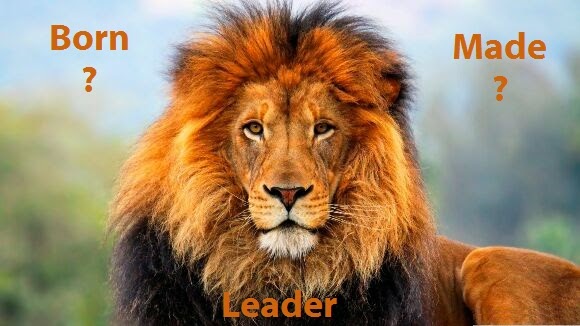
The Born Leader Myth


A few years ago, I had a conversation with the Superintendent of a public school district. We were discussing leadership and youth leadership development. During our conversation he made the remark, "I suppose that you are going to tell me that leaders are made and not born?" After I responded affirmatively, he asserted that leaders were mainly born--not developed. His proof was the elementary school playground. As he explained how some boys and girls seem to attract others to them, I had a vision from my own elementary days of Freddy strutting through the playground at recess with a group of guys following him. This personal memory seemed to be evidence for the Superintendent's assertion for "born leaders." Upon reflection, I remembered that Freddy was older than us by a few years because he had been held back. There may be other explanations of this leader attraction than innate leadership qualities. We all have observed certain people who, for some reason, attract others who want to follow and/or emulate them. But are Freddy and these others born leaders?

Early research into leadership focused on the leader. It was presumed that some individuals were born with certain traits that made them great leaders. This is refereed to as the "great man" theory. After World War II, there was a deep and growing interest in leadership research. Leadership research has grown to include research on leadership skills, leadership styles, leadership situations, and the development of leadership theories such as contingency theories, the path-goal theory, Leader-member exchange, Transformational leadership theory, Servant Leadership, Spiritual Leadership, and more. Even with all of the recent leadership research, the question "are leaders born or made" is still asked.

Serious study into leadership traits has been credited to two studies done by R. M. Stogdill (1948 & 1974). In the first study Stogdill found that the leadership situation is an important factor and that a leader does not become a leader just because he has certain traits. His second study found that while the situation was important, traits are an important part of leadership. R. D. Mann similarly reported that the evidence gives impetus to the situational approach to leadership maintaining that leadership is created through the interaction of individuals. Leadership is a function of the task, composition, and culture of the group. I have often asked groups if they thought that U. S. Grant was a born leader. Most of the respondents say yes (probably based on his leadership during the Civil War). Most war generals are seen as strong leaders and probably "born leaders" (George Washington, Dwight Eisenhower, Colin Powell for example). If you were to ask the same group if Grant was a good president, they almost unanimously say no. This is anecdotal proof that the situation is an important factor in leadership. Leadership ability is not necessarily transferable from one context to another indicating that there are more variables in determining leadership that just a genetic leadership ability.

The difficulty with the trait approach to leadership is in identifying the trait or traits that leaders have in common. In an effort to identify these traits, using meta-analysis, some researchers found that intelligence, masculinity, and dominance were significantly related to how leaders were perceived. Judge, Bono, Ilies, and Gerhardt (2002) developed a chart listing some twenty-one possible traits for emergent or effective leaders from ten separate sources. Kirkpatrick and Locke (1991) determined that leadership traits do matter and identified six traits that leaders have that differ from non-leaders: drive, desire to lead, honesty/integrity, self-confidence, cognitive ability, and knowledge (specifically of business). However, they state that these traits only endow people with the potential for leadership. Additional factors, such as leadership situations, determine effective leadership. Individuals can be born with these traits, they can learn them, or both (Northouse, 2007). Yukl (2010) writes that considerable evidence shows that traits are jointly determined by learning and the inherited tendency to gain satisfaction from particular stimuli or experiences. Some traits, such as values and social needs, are more influenced by learning than others such as temperament and physiological needs. The researcher is left to answer the question of what trait or traits are inherent in the leader themselves and which traits can be learned and developed.

The consensus today seems to be that while some people possess traits and characteristics that are more conducive to good leadership, most of what is considered "leadership" is developed. An army officer once wrote that they could not wait around to identify born leaders--they must develop men and women into leaders. This directly applies to churches today. Many churches lack competent leadership although they may have good pastors. Leadership development is lacking in most churches today. Like the military, churches cannot wait around for "born leaders" to emerge; they must be trained and developed.

Sources:
  • Judge, T. A., Bono, J. E., Ilies, R., & Gerhardt, M. (2002). Personality and leadership: A qualitative and quantitative review. Journal of Applied Psychology, 87, 765-780.
  • Kirkpartic, S. A. & Locke, I. A. (1991). Leadership: Do traits matter? The Executive, 5, 48-60.
  • Mann, R. D. (1959). A review of the relationship between personality and performance in small groups. Psychology Today, 56, 241-270.
  • Horthouse, P. G. (2007). Leadership: Theory and practice (4th ed.), Thousand Oaks, CA: SAGE Publishing.
  • Yukl, G. (2010). Leadership in organizations (7th ed., Kindle ed.), Retrieved from Amazon.com.


I want your input!!
  1. Do you believe that leaders are born?
  2. Do you believe that leaders are developed?
  3. Do you believe that they are both born and developed?


....post a comment below...


Monday, January 26, 2015

Is "doing church" too complicated?

I have found few books more helpful than "Simple Church" (by Thom S. Rainer and Eric Geiger) for helping churches stay on track. I suppose that when I was pastoring I felt that ministry should be complicated to be successful. I didn't consciously say this to myself, but I sure went about pastoring like it was complicated. After reading this book, I  admit that I was guilty of making ministry more complicated than it should be. 

The message of this book is "simple" yet profound. Simple is in. Complex is out. That mantra keeps running over and over in my mind as I coach pastors. It is something that all church workers should be aware of.
Simple Church is defined as a congregation designed around a straightforward and strategic process that moves people through the stages of spiritual growth.
The process is simple:

Clarity  >>> Movement >>> Alignment >>> Focus

"Focus" is the area that I struggled with while I was pastoring. Focus is the commitment to abandon everything that falls outside of the simple ministry process. Leaders tend to get involved in many things that pull them away from the ministry in which they were called to do. 

"Simple Church" is an easy and straightforward read and is worth adding to any church worker's tool box.

Rainer, Thom S. & Geiger, Eric. (2006) Simple Church (Kindle ed.) Nashville, TN: B&H Publishing group.

What book or books do you consider essential for your ministry tool box? Please let me know...leave a comment below and subscribe to this blog so that you will not miss any of my updates.

Check out jimmybayes.org


Sunday, January 25, 2015

The Size of the Dog in the Fight

Mark Twain said something like, "What matters is not the size of the dog in the fight, but the size of the fight in the dog." There is a lot of wisdom in them there words. This is important to remember in a "bigger is better" culture that we live in (especially here in Texas). This is also true when it comes to churches. A bigger church does not mean it's better.

Churches of more than two thousand average attendees represent less than half of one percent of all churches in America. Yet, these mega-churches are often held up to be the models of ministry for all churches. I received an invitation by email to attend a church leadership  meeting sponsored by the Leadership Network (http://leadnet.org). I went online to register for the event only to find out that I could only attend the meeting if I directly worked with a church that averages over 1000 in attendance). Excluding those of us that work with churches of smaller sizes is an indication of how small churches are undervalued and underestimated.

Large churches enjoy the benefits of having more resources, but smaller churches have strategic advantages in the areas of authenticity, discipleship, evangelism, leanness, inter-generational ministry and leadership development. By their nature, small churches are more intimate and developing a sense of community comes more naturally. To capture some of the benefits of small churches, some mega-churches have opened up satellite churches.This "multi-site" approach has become more popular for mega-churches than building larger buildings to house all of their congregation under one roof. The multi-site approach enjoys the resources of a mega-church and the advantages of smaller congregations.

Data that supports the theory of a small church advantage is largely anecdotal because these advantages are harder to quantify. However, the qualitative data is present in the stories of thousands attending small churches. Although, there may not be sufficient data for me to proclaim here that small churches have significant advantages over large churches, I can say without hesitation that being small in size does not have to be a hindrance. The strongest endorsement of small over large church sizes is in the very real effort of large churches trying to emulate the the small church experience through small groups.

If you are aware of quantifiable research in the area of this discussion, I would be interested in examining it. 

Please leave a comment and/or your opinion about small or large churches and please subscribe to my blog.

Check out my webpage at jimmybayes.org


Friday, January 23, 2015

Crisis in American Churches

Is the Church Really in Crisis?

Book Review: The American Church in Crisis

David Olson, in The American Church in Crisis writes  an intriguing essay about the state of the church in America. Although written in 2009, it feels relevant and timely as ever. If you are interested in statistical numbers about the condition of the church, this book is for you. He also provides ample charts for the visual learner.


Olson provides interesting nuggets of fact such as "Fast-growing churches...were more likely located in zip codes where the population growth was higher than the national average. If a church declined or was stable, it was more likely  located in a low-growth zip code where the population growth was lower than the national average." This seems to indicate a direct correlation between church growth and decline and population growth and decline.

This book has four sections. In the first section, observation, Olson looks at the many statistics collected over the many years. After collecting and analyzing the data and trends, Olson makes many good observations and draws some good conclusions such as:
A denomination lays the foundation for its future by (1) each year planting quality new churches, equal to at least 2 percent of the number of congregations in the denomination, (2) creating synergistic systems of health and growth between both new and established churches, and (3) reinvesting the assets of closed churches into the planting of multiple new churches.
Not satisfied with merely communicating the state and challenge for the church in America, in the last section, Olson relates the message and mission of Christ for the church. The message is what Jesus spoke about, what He did for man, and the mission is what Jesus came to act out for man. Solutions are most profitable when churches align their behaviors and resources with their missional values. This book will challenge church leaders to take a hard look at their churches and denominations.

Olson, David T. (2009) The American Church in Crisis: Groundbreaking Research Based on a National Database of over 200,000 Churches (Kindle ed.) Zondervan, 

Saturday, January 17, 2015

Three Empowering Keys to Church Fitness

The definition of health reveals two things. First is the lack of or being free of disease or ailment. The second thing is that health implies soundness and vigor.

The first aspect of health is the absence of any disease or ailment. No church is perfect, but if you have been a part of the Christian church for any length of time, you have more than likely seen churches that are sick because of a debilitating sickness. When I look at churches, I tend to look at the positive things and do not dwell upon the negative. There are, however, some churches that are obviously sick. Some church sicknesses are controlling factions, adversarial people who criticize and hinder things they do not agree with, conflicting relationships, poor leadership, and lack of vision and direction.

These are just a few of the potential sicknesses that can afflict a church. Being free from any of these or other major sicknesses does not mean that the church is a healthy church. The second part of our definition of health is that health implies wholeness and vitality. These two are separate but related. Wholeness is more than the body without a debilitating disease—there must be vitality. Vitality means that the body has all of its parts functioning properly and significant observable signs of life. As a nurse takes the vital signs of a patient--primarily blood pressure and temperature—we can also examine the church body for vital (or vitality) signs. Church leaders should be concerned about the health and vitality of their church, but how to determine church health and vitality is not always easy.

Let's look at the head, heart, hands, and feet of the body and their impact on vitality.

To determine the vitality of the church body, the head must be examined. The head of the church represents the leadership. Church leadership cannot be overestimated. I have often said that a church is what it is because of the leadership and it is not what it is not because of the leadership. That places a lot of responsibility upon the leader (usually the pastor) of the church. You may be thinking, "Yes, but what about our adversary the devil and his demons that are out to destroy the church?" Yes, we do have an enemy that is out to destroy and hinder our efforts, but have we not the promise that the gates of hell will not prevail against us (Mt. 16:18)? If this is true—and it is—then church leaders must admit to themselves that they may be the weakness of the church.

[Caveat: Church Health is not measured by attendance, membership, or money in the bank. As one pastor put it, "Church Health is not measured by butts and bucks."]

The leadership must become students of church health and vitality. I did not know about colic until I became a new father and we could not get our daughter to stop crying. Every time that our kids come down with a sickness, we have to become knowledgeable enough about the ailment to know how to respond. Poor attendance and lack of resources can be a symptom of a greater problem. Just like I had to learn to help my colicky child, pastors must learn how to treat their colicky church. Most of the time the church leaders are too close to the problem to identify it. Pastors do themselves and their churches a favor by getting someone who is familiar with church vitality to help diagnose their vitality.

Next is the heart of the body. The heart represents the spiritual vitality of the body. The spiritual heart is diagnosed by Mark 12:30-31, to love God with all of your heart, soul, mind and strength and to love your neighbor as yourself. In the churches that I work with, this seems to be a strong area. After all, that is what church is all about--loving God and loving others. Most churches have leaders and a core group that truly love God and show love toward others. I have had pastors of small churches point to their love of God and each other as proof of their health in spite of their size. Regardless of the atmosphere of love, acceptance, and forgiveness that exists in your church, this has to be nurtured or it will die. We make sure that our children have plenty of nutritious food. Pastors must make sure that their church has a healthy diet. Spiritual vitality is very important to the church, but it is only one organ of the body that impacts its vitality.

Next are the hands of the body. Hands represents what the church does. The hands are the functions of the church. Being active is a part of life. Ecclesiastes 9:10 says, " Whatever you do, do it with all your heart. For when you go to the grave, there will be no work or planning or knowledge or wisdom." Many church health experts assess church health by assessing the functions of the church. There are two aspects of the Christian life and by extension the church: being and doing. God is first interested in the "being"--who we are. Every Christian should be aware of who they are, but what we do is also important because it reflects who we are. We show our love of God by our worship and obedience--by how we respond to God's love. Being and doing are almost inseparable because they impact each other in profound ways. A coin has two sides regardless how thin or thick it is. If one side of the coin ceases to exist, then the coin itself ceases to exist. You cannot have a coin with only one side. This is equally true with "being" and "doing" as Christians. James makes a similar argument about faith and doing when he says, "Show me your faith without doing and I will show you my faith by what I do" (James 2:18). As with the head and heart, the hands represents only one aspect of church vitality.

Finally we examine the feet of the body. The feet represents evangelism. Isaiah 52:7 says, "How beautiful on the mountains are the feet of those who bring good news, who proclaim peace, who bring good tidings, who proclaim salvation, who say to Zion, 'Your God reigns!'" While most churches are busy "doing", many are inadequate in outreach. Outreach can be measured by the impact they are having on their community and the reputation they have in their area. Sadly, many churches are making very little impact on their community. It is logical to assume that God planted each church strategically so that they could influence and help people they come into contact with. It is also a fact that many communities are unaware of the churches in their area. It is safe to say that the churches that are known are also the churches that are making a difference in their communities. A vital church implies that they are busy working in God's fields either planting or harvesting. A vital church looks outward into their community as we as upward toward God and inward toward their spiritual family.

Church vitality can be measured by examining the head (efficient leadership), the heart (spiritual vitality), the hands (godly behaviors), and the feet (community impact) of the body.

I invite you to enter into the conversation about church health. I have been a part of several groups that dialogue and try to find solutions for ailing churches. I have noticed that church members and lay leaders have not typically been part of the dialogue. I believe that the solution for revitalizing the church will not come from pastors and leaders alone. The solution will come from every member of the body working together.

Please jump into the conversation about the state of the Church in America and leave a comment below.

Thank you for contributing your opinion.
 
 
Visiting our sponsors by clicking on their banner ad, will help support this ministry.
 
Please visit the Dunamis Empowerment foundation (www.dunamisempower.org).